


- Nexperia BV
- NEXT Mobility
In the automotive industry, the performance requirements for in-vehicle power electronics are changing dramatically with the advancement of electrification. In xEVs such as HEVs, PHEVs, BEVs, and 48V mild hybrids, it is necessary to efficiently convert the power stored in the battery and supply it to various applications such as motor drive, charging, voltage conversion, and air conditioning control. For drive INVERTERS, OBCs, DC-DC CONVERTERS, and e-compressors that handle this power conversion, conversion efficiency, heat suppression, miniaturization, and long-term reliability are important factors that affect vehicle performance. Power devices using SiC, or silicon carbide, are attracting attention as a technology that can solve these challenges. Compared to conventional Si (SILICONE) devices, SiC power devices are suitable for high voltage resistance, high-speed SWITCHES, and high-temperature operation, and are becoming increasingly important in in-vehicle POWER SUPPLIES systems that are moving towards 800V and high power density.
This article will first clarify "why SiC is needed for automotive electrification," and then explain "why Nexperia's SiC solutions are a strong option among the many SiC manufacturers" from the perspectives of quality, reliability, packaging technology, product portfolio, and supply system.
ACES accelerates the electrification of vehicles
In recent years, the automotive industry has been undergoing significant transformations due to advancements in ACES, which includes Autonomous, Connected, Electrification, and Shared Mobility & Services.
Among these, electrification is attracting attention as an area where the performance of power semiconductors directly impacts vehicle performance. As electrification progresses, the amount of power handled within a vehicle increases, and power conversion circuits require higher efficiency, smaller mounting area, and higher reliability.
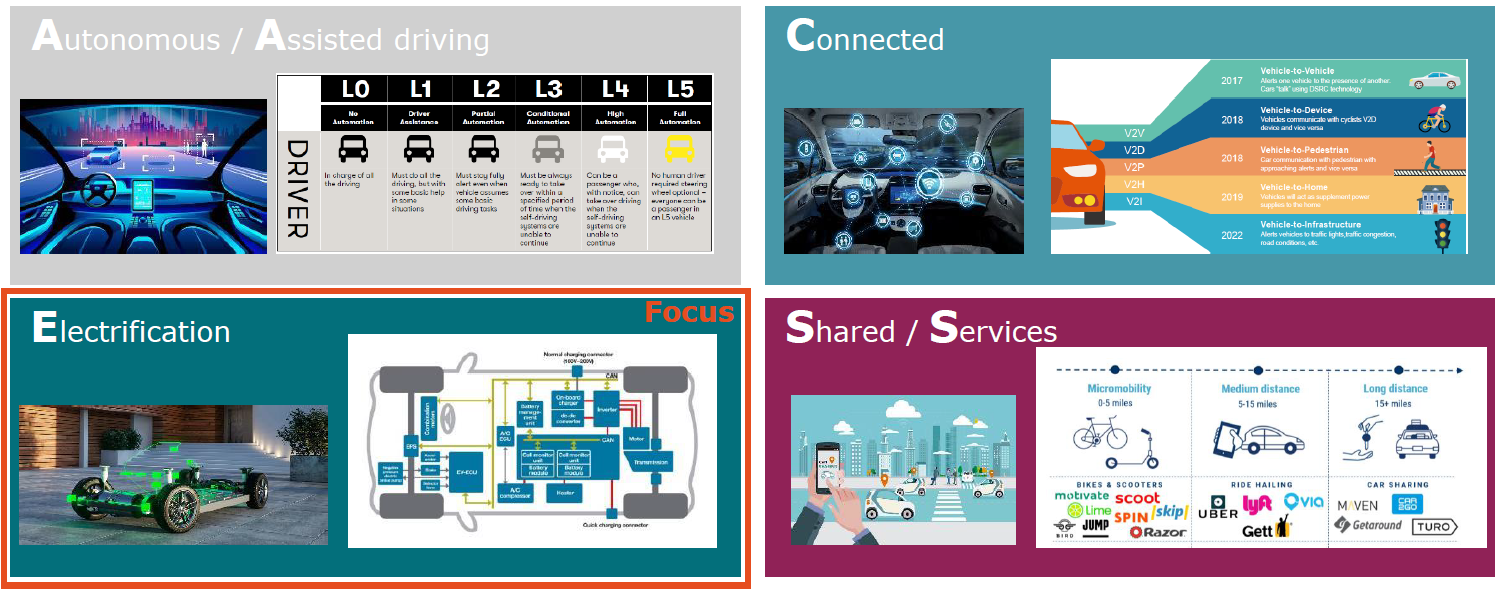
Figure 1: Changes in the automotive market driven by ACES
With the advancement of ACES, the number of electronic systems installed in automobiles is increasing. In particular, the progress of electrification is a major factor driving the demand for even greater efficiency, miniaturization, and reliability in power conversion circuits such as drive INVERTERS, OBCs, and DC-DC CONVERTERS.
Power electronics increasing in xEVs
xEVs are equipped with numerous power conversion circuits to convert the power supplied from the battery according to its application. Typical applications include drive INVERTERS, OBCs, DC-DC CONVERTERS, e-Compressors, Power Distribution Units, and BMS-related POWER SUPPLIES.
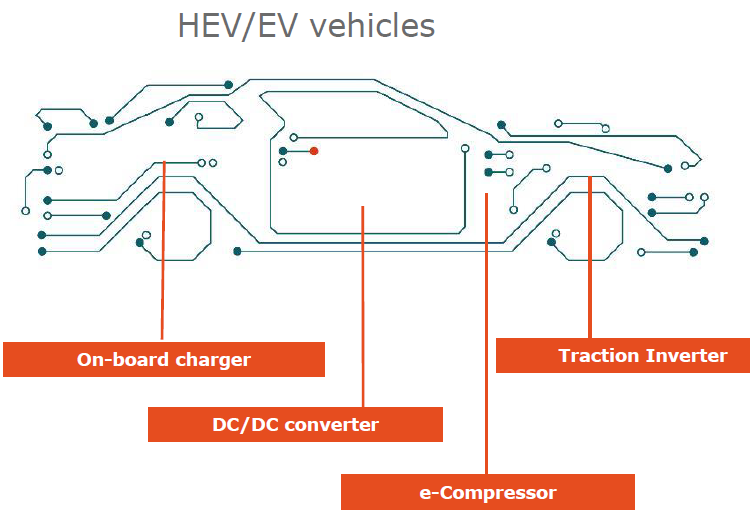
Figure 2. Major xEV applications
| Application | Main role |
|---|---|
| Traction Inverter | Motor-driven |
| OBC | On-board charging |
| DC-DC Converter | Voltage conversion |
| e-Compressor | Electric air conditioning |
| Power Distribution Unit | Power distribution |
| BMS-related POWER SUPPLIES | Battery Management |
Figure 3: List of major electrification units in xEVs
xEVs are equipped with multiple power conversion units. Since all of these units require high efficiency, miniaturization, and high reliability, the introduction of SiC power devices is expected to offer significant advantages.
Improving power conversion efficiency allows for more efficient use of battery energy. This leads to increased driving range in BEVs, improved fuel efficiency in HEVs and PHEVs, and reduced heat generation and smaller cooling systems in each unit. In short, the performance of power semiconductors is not merely a matter of component performance, but significantly impacts the overall efficiency, installability, and thermal design of the vehicle.
Why SiC now?
Si IGBTS have been widely used in conventional automotive high-voltage applications. While Si IGBTS are a mature technology with a proven track record, they can present challenges in terms of SWITCHES losses, heat generation during high-frequency operation, and system miniaturization.
On the other hand, recent xEVs are seeing advancements in 800V systems, fast charging capabilities, higher power output, and higher power density. To meet these demands, SiC MOS FETS offer features such as high voltage resistance, high-speed SWITCHES, high-temperature operation, and low SWITCHES losses.
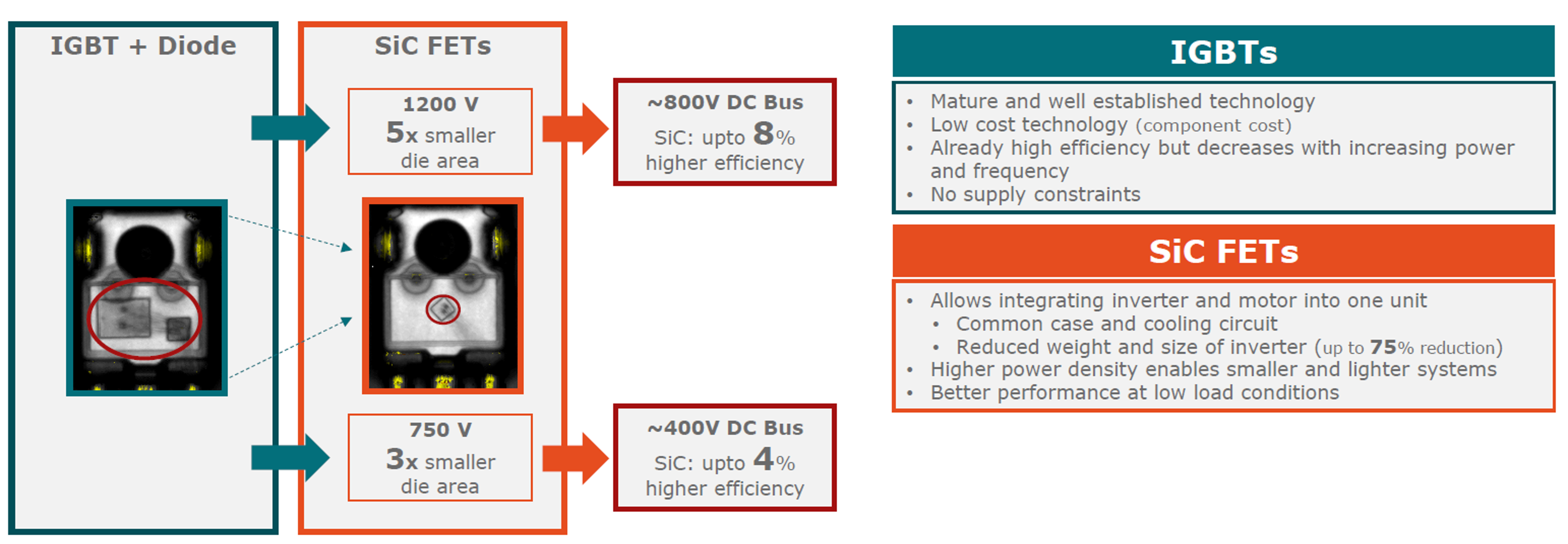
Figure 4: Comparison of Si IGBTS and SiC MOS FETS
SiC MOS FETS enable high-frequency operation, reducing SWITCHES losses. This not only improves system efficiency but also contributes to miniaturization of peripheral components such as INDUCTORS and TRANSFORMERS. Higher frequencies also make it easier to miniaturize MAGNETIC PARTS, leading to higher power density in the entire power conversion unit.
Furthermore, by applying SiC MOS FETS, significant miniaturization and weight reduction can be expected compared to conventional Si IGBTS configurations. While the effect varies depending on the application and design conditions, in some cases, it can lead to a weight reduction of more than 50% for the entire power conversion system.
The advantages of SiC extend beyond simply reducing the losses of individual devices. Reduced heat generation allows for greater flexibility in cooling design, and miniaturization of surrounding components makes it easier to reduce the overall unit footprint. Therefore, SiC is an important option for simultaneously achieving high efficiency and miniaturization of xEVs.
Main benefits to be expected from introducing SiC
Applying SiC power devices to automotive POWER SUPPLIES systems can primarily yield the following benefits:
Firstly, it reduces SWITCHES losses. SiC MOS FETS are suitable for high-speed SWITCHES and have the advantage of easily minimizing losses during power conversion. Reduced losses also reduce heat generation, leading to smaller cooling mechanisms and simplified thermal design.
Secondly, there is the need for high-voltage systems. Automotive POWER SUPPLIES systems, which are increasingly operating at 800V, require devices with high voltage resistance and low loss. SiC MOS FETS are devices that are well-suited to these high-voltage and high-efficiency requirements.
Thirdly, it allows for system miniaturization. High-frequency operation makes it easier to miniaturize peripheral components such as INDUCTORS, TRANSFORMERS, and CAPACITORS. This increases design flexibility for automotive units with limited mounting space, such as OBCs, DC-DC CONVERTERS, and e-compressors.
These are the general technological advantages of SiC itself. The next important consideration is which manufacturer's product to choose from among the many SiC manufacturers available.
Why Nexperia SiC?
Many semiconductor manufacturers have entered the SiC market, leading to intensified market competition. However, for automotive applications, adoption is not determined solely by individual specifications such as on-resistance and voltage rating. When considering installation in mass-produced vehicles, a comprehensive evaluation is necessary, including quality, reliability, packaging technology, product portfolio, and supply chain.
Nexperia has a long track record of supplying DISCRETE semiconductors for automotive applications, and is extending that expertise to its SiC products. The key feature of Nexperia's SiC solutions is not simply that it offers a lineup of SiC MOS FETS and SiC Schottky DIODES, but that it allows for consideration of quality, reliability, packaging technology, and supply chain, all of which are crucial for automotive applications.
| Evaluation criteria | Features of Nexperia SiC |
|---|---|
| quality | Quality control expertise cultivated through DISCRETE semiconductors for automotive applications. |
| Reliability | In addition to compliance with AEC-Q101, additional evaluations were conducted assuming real-world usage environments. |
| Packaging technology | Options include QDPAK, X.PAK, TO-247-4, TO-263-7, etc. |
| portfolio | We offer SiC MOS FETS, SiC Schottky DIODES, and SiC modules. |
| Supply system | Global development, manufacturing, and supply chain |
Figure 5: Evaluation axes and features of Nexperia SiC
In the following sections, we will explain why Nexperia SiC is a promising option for automotive applications, based on these five evaluation criteria.
Advantage ① Quality control expertise cultivated through automotive DISCRETE.
Automotive applications require stable operation over long periods in harsh environments, including high temperatures, high humidity, vibration, and rapid temperature changes. Therefore, when selecting SiC devices, not only on-resistance and SWITCHES performance are important, but also long-term reliability and quality control considerations are crucial.
Nexperia has been supplying DISCRETE semiconductors for automotive applications for many years, and is applying the quality control expertise cultivated in the automotive market, where high quality and reliability are required, to its SiC products as well.
What's important here isn't simply stating "high quality." For automotive engineers, factors such as variability during mass production, stability during long-term use, and margin for operation in harsh environments are key considerations when deciding whether to adopt a product. Nexperia SiC can be considered as a solution that takes these requirements for automotive applications into account.
Advantage ② Reliability evaluation exceeding AEC-Q101
For DISCRETE semiconductors used in automotive applications, compliance with AEC-Q101 is a crucial evaluation criterion. However, in actual automotive applications, it's not enough for the semiconductor to simply conform to the standard; its long-term durability and stability under high-temperature and high-humidity environments must also be verified.
In addition to complying with AEC-Q101, Nexperia conducts additional evaluations simulating real-world usage environments to ensure the reliability level required in the automotive market.
| Evaluation items | Content |
|---|---|
| HTRB | High-temperature reverse bias test |
| HV-H3TRB | High temperature, high humidity, high voltage test |
| Temperature Cycling | Temperature cycling test |
| Dynamic HTGB | Gate reliability evaluation |
| TDDB | Insulator reliability evaluation |
Figure 6 Overview of SiC MOS FETS reliability evaluation
Advantage ③ Packaging technologies such as QDPAK and X.PAK
To fully utilize the performance of SiC MOS FETS in automotive systems, not only chip characteristics but also packaging technology is crucial. For high-speed SWITCHES SiCs, parasitic INDUCTORS, heat dissipation, insulation, and mounting capabilities all affect system performance. Therefore, selecting an appropriate package based on the application and cooling method is essential.
Nexperia's 1200V SiC MOS FETS lineup includes multiple packages such as QDPAK, TO-247-4, TO-263-7, and X.PAK.
In particular, QDPAK and X.PAK can be positioned as package options that take into account the implementability, heat dissipation, and power density required for automotive POWER SUPPLIES systems. In SiC devices, parasitic INDUCTORS and thermal design associated with high-speed SWITCHES affect system performance, so package selection is just as important as device selection.
| package | RDS(on) range | Product Examples |
|---|---|---|
| QDPAK | 17mΩ, 30mΩ, 40mΩ, 60mΩ, 80mΩ | NSF017120T1A0-Q, etc. |
| TO-247-4 | 17mΩ, 30mΩ, 40mΩ, 60mΩ, 80mΩ | NSF017120L4A0-Q, etc. |
| TO-263-7 | 30mΩ, 40mΩ, 60mΩ | NSF030120D7A0-Q, etc. |
| X.PAK | 17mΩ, 30mΩ, 40mΩ, 60mΩ, 80mΩ | NSF017120T2A0-Q, etc. |
Figure 7 1200V SiC MOS FETS package deployment
Nexperia offers multiple packages to choose from depending on the application and implementation requirements. Having package options such as QDPAK and X.PAK makes it easier to meet application-specific design requirements, including heat dissipation, ease of implementation, and power density.
Advantage ④: Broad automotive SiC portfolio
Nexperia offers a product portfolio covering key xEV applications, including SiC MOS FETS, SiC Schottky DIODES, and SiC modules. Each power conversion unit—such as drive INVERTERS, OBCs, DC-DC CONVERTERS, and e-compressors—has different voltage ratings, current ratings, package sizes, and thermal requirements. Therefore, a broad product portfolio is crucial for early-stage candidate selection in design.
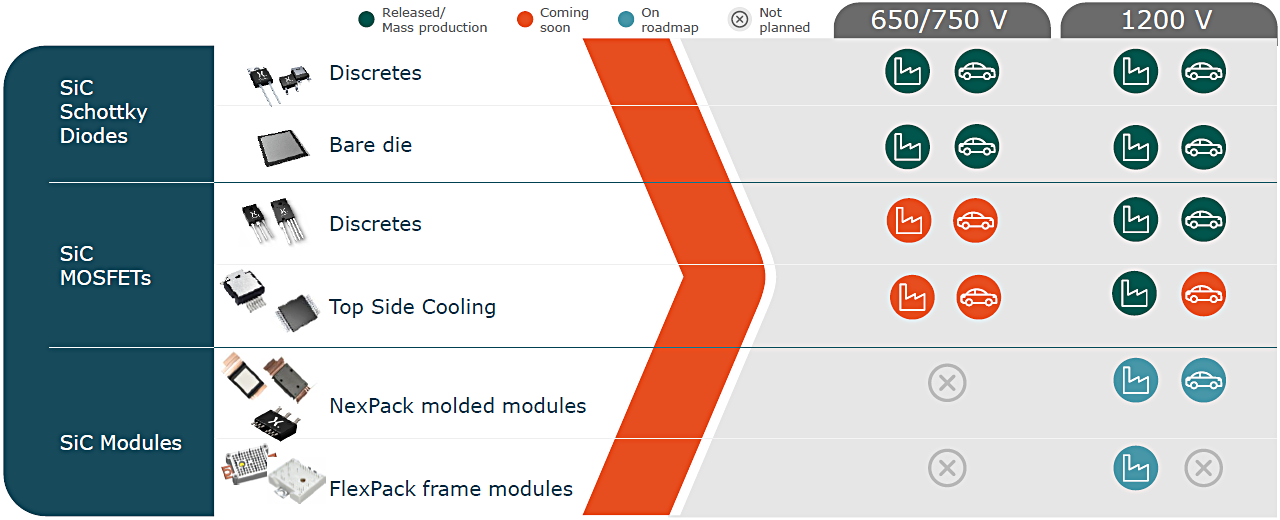
Figure 8 Nexperia SiC Portfolio (as of May 2026)
Nexperia offers a wide range of SiC products, including SiC MOS FETS, SiC Schottky DIODES, and SiC modules, to meet the diverse needs of automotive applications, from INVERTERS to charging systems.
Automotive 1200V SiC MOS FETS
In high-voltage xEV systems, the adoption of 1200V class SiC MOS FETS is expanding. Nexperia offers a range of products with on-resistances from 17mΩ to 80mΩ.
Figure 9 1200V SiC MOS FETS Lineup
Low on-resistance components are suitable for high-current applications, while components with relatively high on-resistance can be selected according to the application, such as OBCs, DC-DC converters, and auxiliary systems. In actual selection, it is necessary to comprehensively evaluate not only the on-resistance but also SWITCHES losses, thermal characteristics, gate drive conditions, package, and availability.
Automotive SiC Schottky DIODES
SiC Schottky DIODES are used in PFC circuits, OBCs, DC-DC CONVERTERS, and auxiliary POWER SUPPLIES. One of their major features is their extremely low reverse recovery loss. By suppressing reverse recovery loss, they contribute to higher efficiency, reduced EMI, and higher frequency operation.
650V
| Package | Current (A) | Product Name | Datasheet |
|---|---|---|---|
| D2PAK | 10 | PSC1065J-Q | https://assets.nexperia.com/documents/data-sheet/PSC1065J-Q.pdf |
| 16 | PSC1665J-Q | https://assets.nexperia.com/documents/data-sheet/PSC1665J-Q.pdf | |
| 20 | PSC2065J-Q | https://assets.nexperia.com/documents/data-sheet/PSC2065J-Q.pdf | |
| DPAK | 10 | PSC1065H-Q | https://assets.nexperia.com/documents/data-sheet/PSC1065H-Q.pdf |
| X.PAK | 20 | PSC2065T2A0-Q | https://assets.nexperia.com/documents/data-sheet/PSC2065T2A0-Q.pdf |
1200V
| Package | Current (A) | Product Name | Datasheet |
|---|---|---|---|
| D2PAK | 10 | PSC10120J-Q | https://assets.nexperia.com/documents/data-sheet/PSC10120J-Q.pdf |
| 16 | PSC16120J-Q | https://assets.nexperia.com/documents/data-sheet/PSC16120J-Q.pdf | |
| 20 | PSC20120J-Q | https://assets.nexperia.com/documents/data-sheet/PSC20120J-Q.pdf |
Figure 10 SiC Schottky DIODES lineup
Nexperia's SiC Schottky DIODES offer a voltage rating range from 650V to 1200V, making them suitable for high-efficiency POWER SUPPLIES applications such as OBCs, PFCs, and DC-DC CONVERTERS.
Advantage 5: Global development and supply system
For CAR PARTS, not only performance and quality, but also long-term supply is a crucial evaluation criterion. If supply risks arise after the design is adopted, re-evaluation or design changes may be necessary, potentially impacting the development schedule.
Therefore, when selecting SiC devices, in addition to product performance, it is also important to check the systems in place to support mass production startup and long-term supply.
Nexperia has established a system that supports the stable supply of high-quality SiC products by coordinating globally from research and development to mass production.
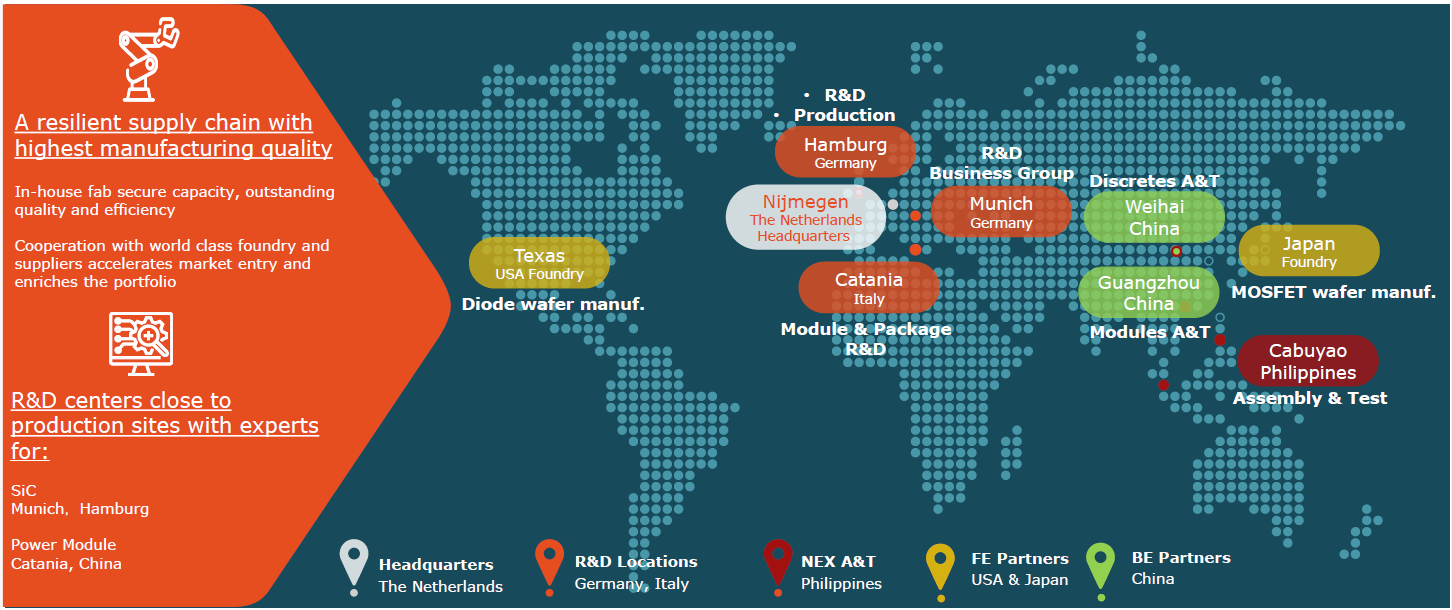
Figure 11 Nexperia Global SiC System (as of May 2026)
By strategically positioning research and development and manufacturing bases globally, we have established a system that supports everything from new product development to mass production launch and long-term supply. For automotive applications, this kind of supply continuity is a crucial evaluation criterion when selecting products.
Nexperia SiC Solutions by Application
Nexperia SiC products can be applied to various power conversion units in xEVs. Since the required characteristics differ for each application, it is important to select the appropriate product while considering voltage withstand capability, on-resistance, package, thermal design, and reliability.
| Application | Recommended Products | Expected effects |
|---|---|---|
| Traction Inverter | 1200V SiC MOS FETS, module | Higher efficiency, reduced heat generation |
| OBC | SiC MOS FETS, SiC SBD | High power density |
| DC-DC | SiC MOS FETS | High efficiency |
| e-Compressor | SiC MOS FETS | Reduce power consumption |
Figure 12 Recommended Solutions by Application
Traction inverters are expected to offer higher efficiency and reduced heat generation, OBCs to increase power density, DC-DC CONVERTERS to improve efficiency, and e-compressors to reduce power consumption. Nexperia's SiC MOS FETS, SiC Schottky DIODES, and modules can be categorized as a product line that addresses key power conversion applications in xEVs.
Points to check when selecting a SiC device
When selecting SiC devices, it is important to evaluate them comprehensively in accordance with the actual circuit conditions, rather than judging solely on on-resistance and voltage rating.
For drive INVERTERS, it is necessary to check conduction losses, SWITCHES losses, cooling conditions, and package thermal characteristics during high-current operation. For OBCs, the SWITCHES frequency, efficiency, EMI, and thermal design of the PFC stage and isolated DC-DC stage are important. For DC-DC CONVERTERS, the balance between miniaturization and high efficiency is a key selection point, while for e-Compressors, stability in high-temperature environments and reduced power consumption are important selection criteria.
| Check items | Points to check |
|---|---|
| Pressure resistance | 400V system, 800V system, and margin including surge voltage. |
| On-resistance | Balance between conductivity loss and heat generation |
| SWITCHES Losses | Operating frequency, gate resistance conditions, dv/dt |
| package | Heat dissipation, ease of implementation, parasitic INDUCTORS |
| Reliability | AEC-Q101, additional reliability evaluation |
| Supply system | Mass production timing, long-term supply, alternative candidates |
Figure 13: Points to check during selection
SiC is a high-performance device, but to fully utilize its capabilities, system design is crucial, encompassing not only the device itself but also gate drive, board layout, heat dissipation structure, and EMI countermeasures.
Summary
SiC power devices are a crucial technology for achieving higher efficiency, miniaturization, and reliability in xEVs. Compared to conventional Si IGBTS, SiC MOS FETS offer advantages such as high voltage resistance, high-speed SWITCHES, high-temperature operation, and low loss, making them increasingly important in automotive POWER SUPPLIES systems where voltages are increasing to 800V and power density is rising.
On the other hand, selecting SiC devices requires a comprehensive evaluation that goes beyond simply being SiC or its individual specifications, including the quality, reliability, packaging technology, portfolio, and supply chain required for automotive applications.
Nexperia provides SiC solutions that support automotive electrification through its expertise in quality and reliability cultivated in DISCRETE semiconductors for automotive applications, additional evaluation beyond AEC-Q101, package development including QDPAK and X.PAK, a broad portfolio of SiC MOS FETS, SiC Schottky DIODES, and SiC modules, and a global development and supply system.
As we move further towards 800V power supply, high-power charging, and higher power density, SiC is a crucial technology supporting the core of next-generation xEVs. Nexperia supports a wide range of applications, including Traction Inverters, OBCs, DC-DC Converters, and e-Compressors, through SiC MOS FETS, SiC Schottky DIODES, and SiC modules. It will be a strong choice for development where automotive quality, reliability, and supply chains are paramount.
Regarding sample supply
Samples are available. If you would like a sample, please contact us using Inquiry form below. After reviewing your request, a sales representative will contact you and send you a sample.