
Automotive Power Tailgate (PLG) Configuration and Technological Trends
Vehicle electrical systems that support opening/closing convenience, safety, and electrification.
1. What is an on-board power tailgate (PLG)?
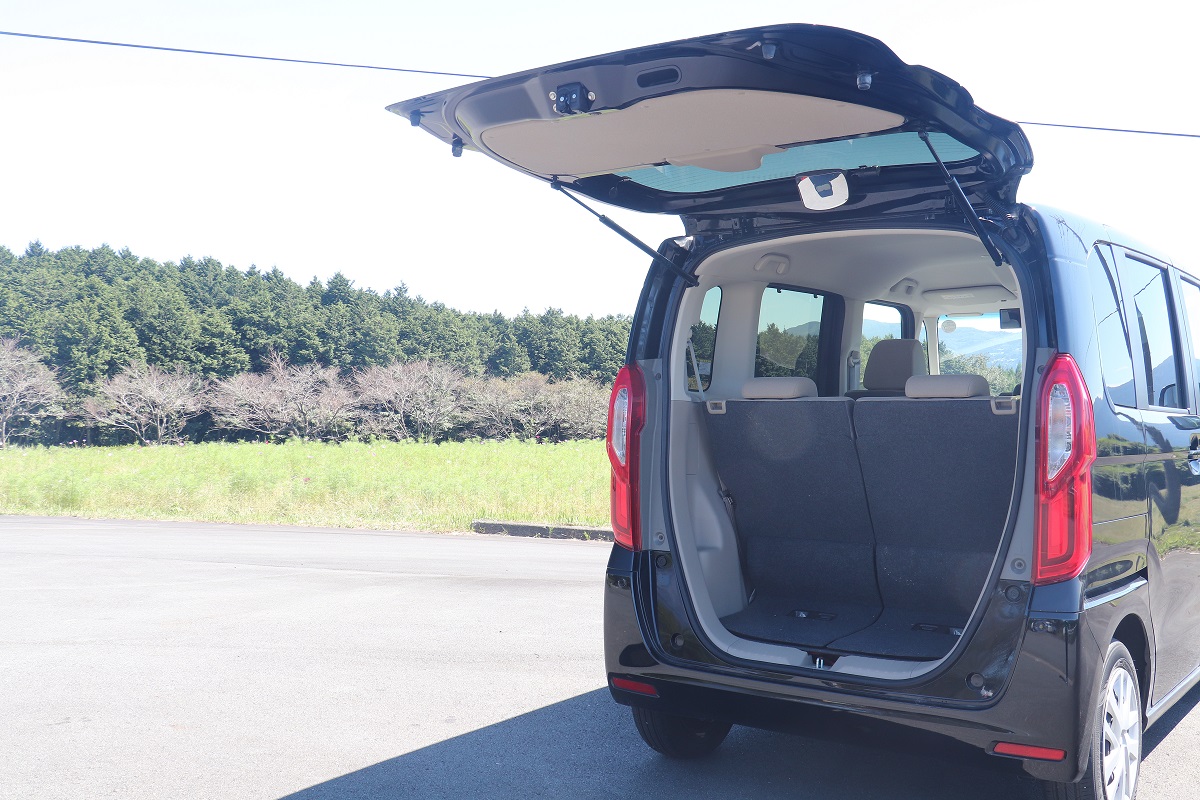
A vehicle-mounted power tailgate (PLG) is an electronic vehicle system that uses an electric motor to automatically open and close the tailgate (back door) at the rear of the vehicle.
Replacing the conventional manual opening and closing mechanism, this system is being adopted in many vehicles, primarily SUVs and minivans.
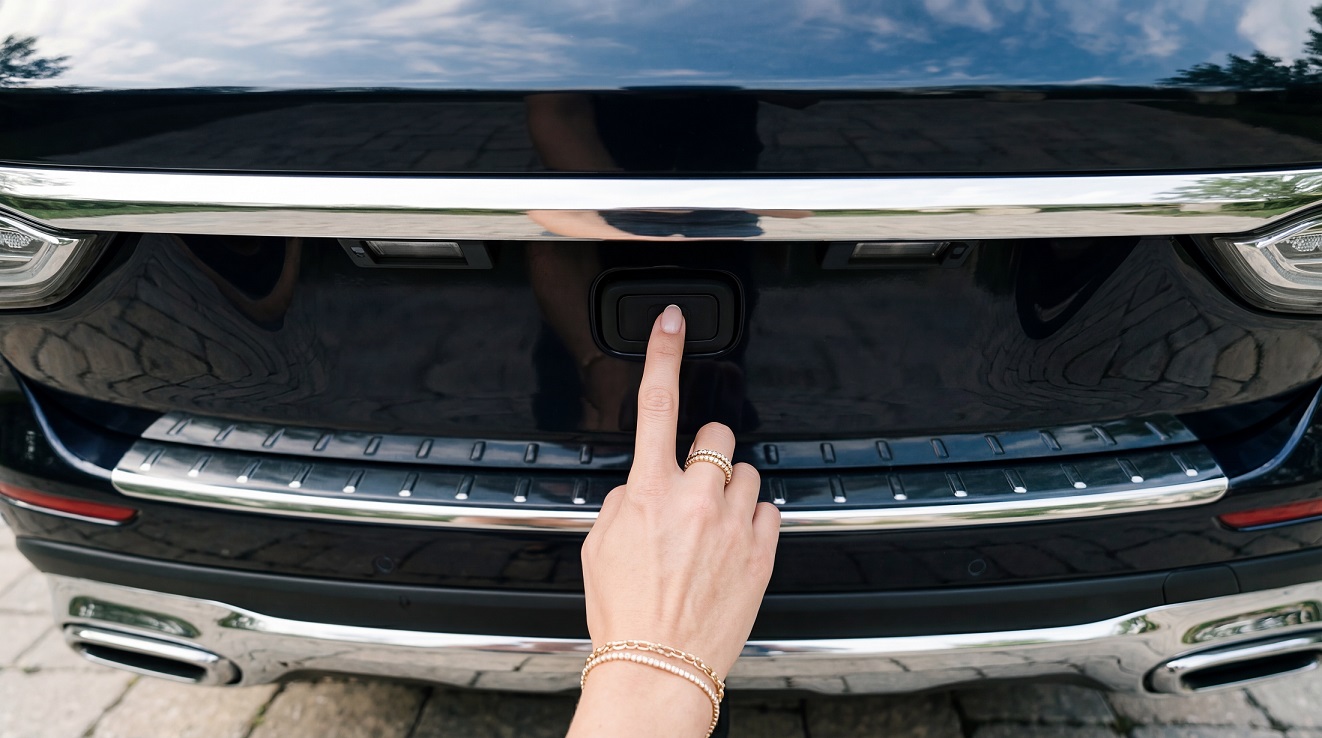
PLGs can be opened and closed using SWITCHES, smart keys, or foot movements (kick sensors). In recent years, they have evolved into important systems with more advanced features, such as a memory function that stops the tailgate at a desired opening angle and anti-pinch protection through obstacle detection. In addition to improving convenience and comfort, they have become indispensable from a safety perspective.
2. System Configuration
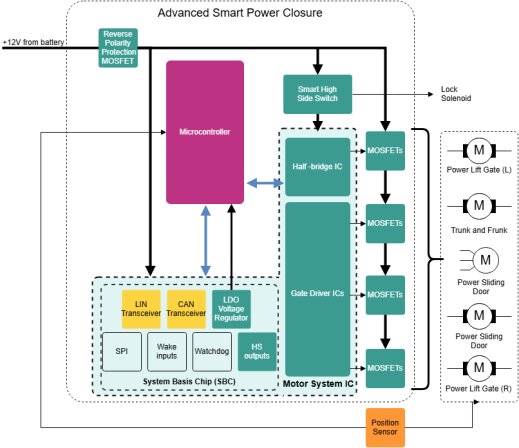
The PLG (Plant Lock Generator) is a control system that detects user opening and closing commands and appropriately drives the tailgate. It mainly consists of an opening/closing SWITCHES /sensor, an ECU (Electronic Control Unit), a motor driver, an electric motor (spindle drive), and position and ELECTRIC CURRENT SENSORS.
3. Flow of Operation
What's important here is that it's not just about running the motor, but also constantly monitoring its operating state. For example, if it comes into contact with an obstacle such as a person or luggage during opening or closing, the motor current and rotation speed will change. By sensing these changes, the ECU ensures safety by stopping or reversing the operation if it determines that there is an abnormality.
4. Main design challenges
Furthermore, the tailgate requires significant torque and power consumption to drive large and heavy components. As vehicles become more electrified, the importance of power efficiency and heat dissipation measures is also increasing. Standby power and the efficiency of control circuits have a considerable impact on the overall power consumption of the vehicle. In EVs in particular, optimizing the power consumption of these auxiliary systems is more important than ever before.
Furthermore, miniaturization of circuits and components is crucial because mounting space and wiring are limited around the tailgate. In addition, it is necessary to address automotive-specific requirements such as noise and EMI countermeasures associated with motor drive, resistance to temperature and humidity fluctuations in outdoor environments, and long-term reliability.


5. Technology Trends
Furthermore, the shift in control from analog circuits to an MCU makes it easier to add functions and tune the system via software. This facilitates more advanced control, such as optimized pinch detection, memory stop at arbitrary opening angles, hands-free (kick sensor) opening and closing, and learning functions. In addition, integration with peripheral functions such as smart keys and body control is progressing, and it is expected that system optimization at the vehicle level will accelerate even further in the future.
6. Design Approach
Furthermore, many challenges in the design field are difficult to solve through theory alone. Typical examples include deviations in current detection values due to temperature changes, inrush current during motor startup, the effects of noise due to wiring length, and the trade-off between false detection and response speed. To address these practical challenges, a comprehensive approach is essential, including not only device selection but also circuit design, control algorithms, and layout design.
7. The value that Infineon can offer
Infineon offers a wide range of solutions to meet these requirements, including motor control, POWER SUPPLIES control, and MCU control. This makes it easier to achieve values such as improved pinch detection accuracy, lower power consumption, smaller ECUs, and higher system reliability.

8. Related Products
This page focuses on the power tailgate application itself, but in actual design, the selection of devices such as MOTOR DRIVER IC, automotive MCUs, and POWER SUPPLIES ICs is also important.
Related products tailored to your specific needs and requirements can be found on the product introduction page.
-

Automotive Microcontrollers: Supporting Next-Generation Automotive System Development with AURIX™ and TRAVEO™
-
MOS FETS: OptiMOS™ and CoolMOS™ achieve high efficiency in power conversion.
-

Gate Driver: GATE DRIVER with high voltage resistance and high insulation capabilities, ensuring both safety and performance.
9. FAQ
Generally, this is determined by monitoring changes in motor current and rotational state to detect abnormal load increases. This may involve not only simple threshold checks but also control LOGIC tailored to the specific situation.
While a simple configuration may suffice for basic functions, a configuration using an MCU is common when safety features, advanced control, or integration with other functions are required.
In EVs, the demand for power efficiency across the entire vehicle increases, making considerations of standby power and control efficiency even more important. Power-saving design is also becoming increasingly significant, even for auxiliary systems.