
NEOS Controller Implementation Case Studies Gallery
Here are some examples of our successful implementations using the high-quality motor controller, "NEOS Controller."
Implementation Example ① Assembly Point / 48V Motor & Motor Controller
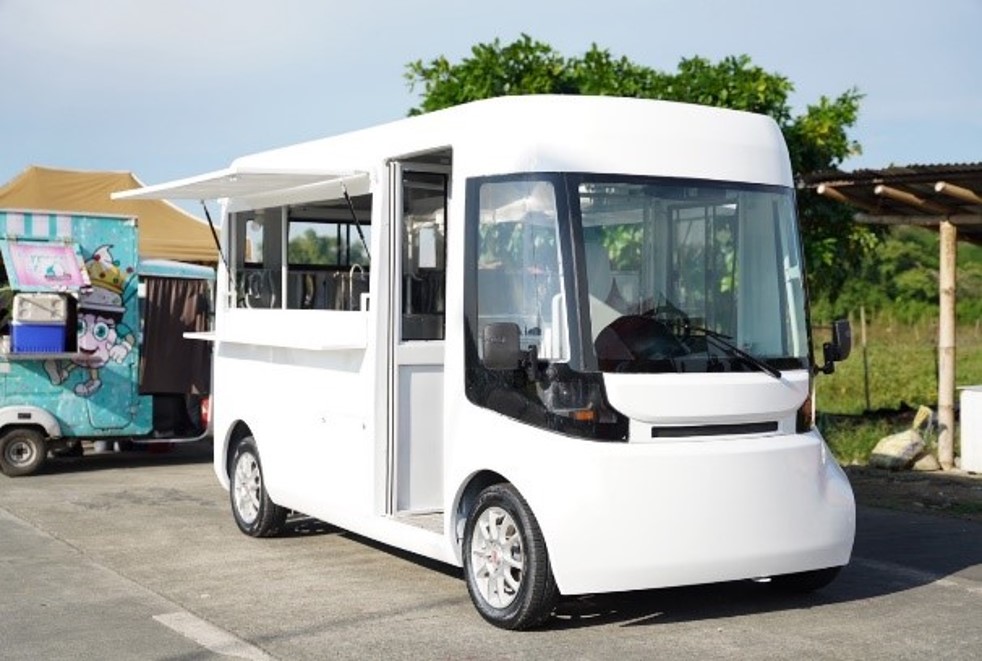
Background/issues
The need for electrification and the importance of stable supply of low-voltage electric mobility in the Philippines.
In the Philippines, public transport buses called jeepneys have long been widespread and are a familiar mode of transportation for ordinary people. Jeepneys, which roar along the road emitting thick black smoke, are truly an iconic form of Philippine mobility. However, due to environmental concerns, the need for cleaner electric buses is increasing year by year. Securing high-quality motors and motor controllers to support powerful operation is a challenge. While "cheap and low-quality" products may contribute to short-term cost reduction, they pose a challenge in the medium to long term due to the difficulty in obtaining maintenance parts, making long-term stable supply crucial.
Products introduced
48V motors and motor controllers
This company manufactures and sells minibuses in the Philippines, and for many years they have been using our 48V motors and motor controllers as a set. NEOS controllers are a perfect fit for this company, which emphasizes Japanese design and quality, and they are very happy to have us as their trusted supplier.
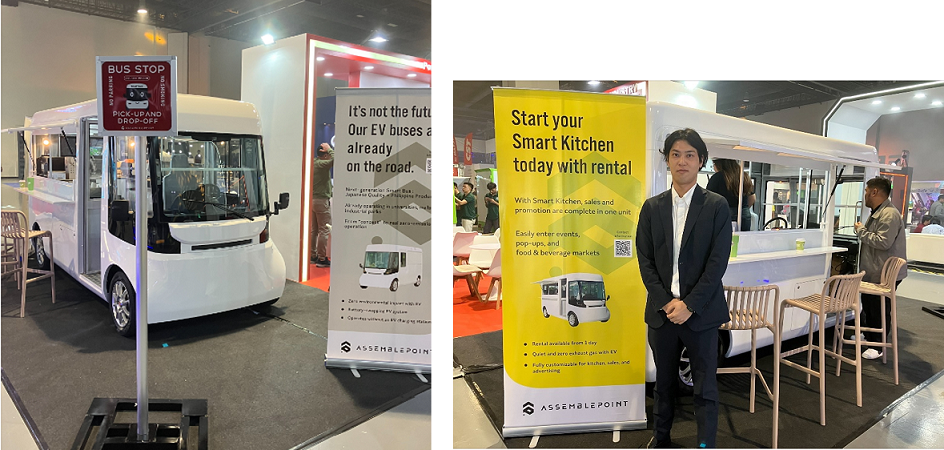
At the Philippine EV Exhibition (eVAP), we exhibited our vehicles at our booth, supporting the acquisition of new electric minibus customers in the Philippines.
Furthermore, the company is venturing into new businesses in the Philippines by converting smart buses into food trucks.
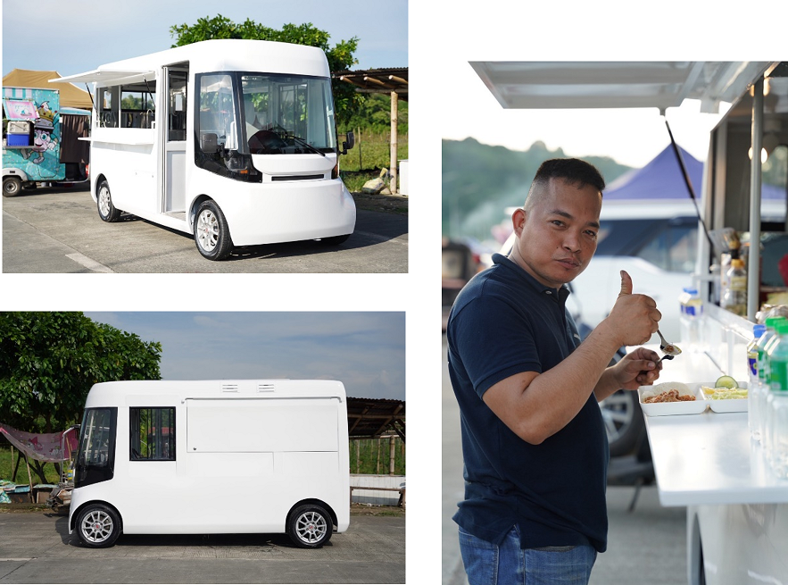
Implementation Results ② Philippines EGV/48V Series Motor & Motor Controller
NEXT Mobility
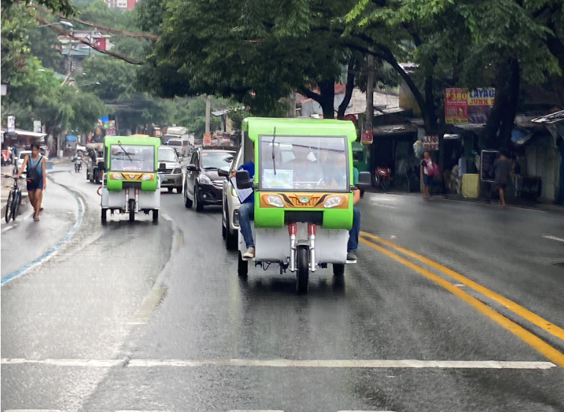
Background/issues
The importance of climbing ability and regenerative braking function in low-voltage electric mobility.
The company manufactures three-wheeled electric mobility vehicles in Antipolo City, Philippines, and operates its own public transport service with approximately 500 vehicles. Antipolo City has many hills, and the company originally used a Chinese-made controller, but it had the problem of overheating, making it impossible to climb hills. The NEOS controller allows customers to freely adjust the parameters, thus overcoming this problem. Furthermore, the regenerative braking function is an effective means of deceleration on long downhill slopes, assisting the driver.
Products introduced
48V motors and motor controllers
The differences from other companies' controllers are: ① the ability for customers to freely change parameters themselves, ② regenerative braking function, and ③ the ability to ensure long-term stable supply. Furthermore, our extensive local support provided by our Manila representative office has led to many customers adopting our motor and motor controller as a set for many years. At the Philippines' largest EV exhibition (eVAP), held once a year, we exhibit vehicles at our booth and support the acquisition of new customers, mainly from government agencies.
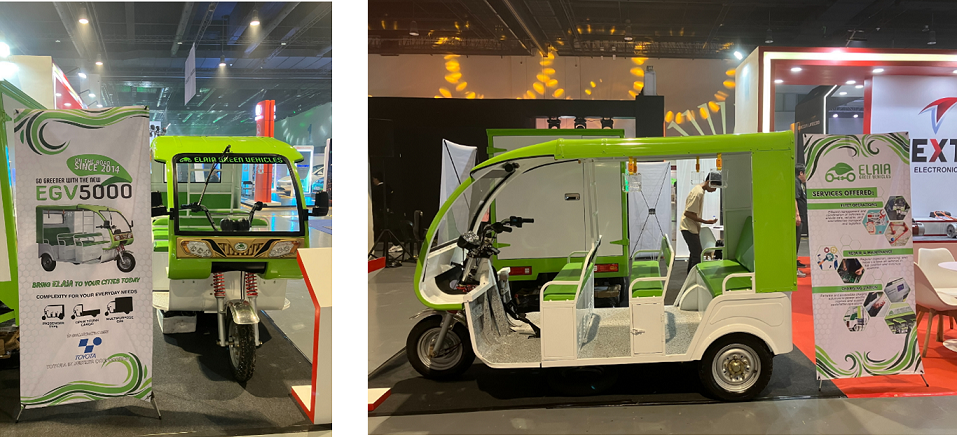
The company's three-wheeled electric mobility vehicle was exhibited at our booth at the Philippine EV Exhibition (eVAP). We are supporting new customer acquisition in the Philippine market.
Related article: Application implementation case study: Eliah Green Vehicles, EGV, Philippines
Implementation Record ③ Vietnam IMAE/80V Motor Controller
Background/issues
The need for electrification of low-voltage electric tourist minibuses and the importance of robustness and high durability.
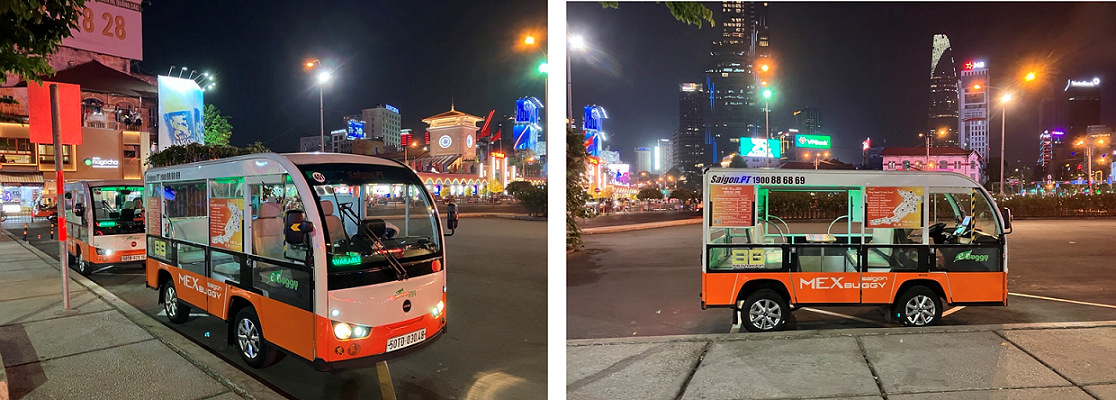
Vietnam is a major motorcycle-using nation, with approximately 50 million motorcycles in operation. While the shift from gasoline-powered to electric motorcycles is progressing, there is also a growing need for clean, CO2-free electrified public buses that run through cities.
Products introduced
80V motor controller
While the company's main business is OEM manufacturing of golf carts for North America, they also manufacture public transport minibuses for Ho Chi Minh City, and they have adopted our 80V controllers through us. In tropical cities like Ho Chi Minh City, there are challenges regarding the durability required of controllers, and the NEOS controller is playing a role in overcoming these challenges. When you travel to Ho Chi Minh City, please take a ride on one of their minibuses and experience the performance of the NEOS controller for yourself.
Related Article: People and cities alike! Experience the sightseeing EV cart
Implementation Record ④ Korean MPS/48V Series Motor Controller
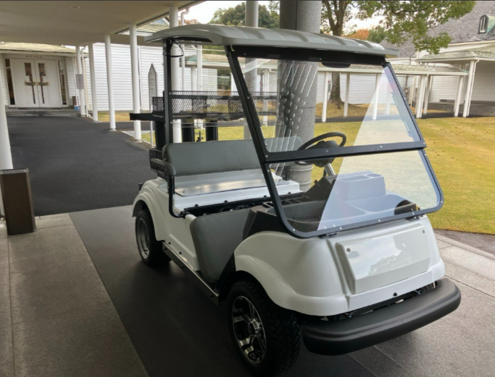
Greenboy III 2-seater 48V
Background/issues
The need for electrification and the importance of high reliability in electric golf carts
The market for LSVs (Low Speed Vehicles), including golf carts, is expanding. These vehicles are also moving away from gasoline engines towards electrification, and the need for motor INVERTERS equipped with driving control functions is increasing.
Products introduced
48V motor controller
The company was originally founded as a battery startup. They started manufacturing and selling golf carts equipped with their own batteries in South Korea, and are now mass-producing and selling them in Japan through Green Boy Japan Co., Ltd.
The NEOS controller, which combines high quality and robustness, has overcome previous quality issues, and plans are underway to export to North America in addition to Japan and South Korea.
Greenboy Japan Co., Ltd. sells the MPS golf cart "Greenboy III".
Until now, we have been importing and selling 5-seater series golf carts from South Korea, but we plan to establish a manufacturing line on the grounds of Green Hill Mizunami Golf Club and begin manufacturing and selling domestically produced golf carts.
The advantages of focusing on selling two-seater carts
1. Compared to a 5-seater, a 2-seater can shorten playing time.
The usual 4 hours and 20 minutes per round has been shortened to 3 hours and 20 minutes, reducing the time by about an hour, allowing players to finish by early afternoon.
2. By shortening playing time, we can increase bookings by 3 groups each in the morning and afternoon, for a total of 6 groups per day.
As a result, it can contribute to the golf course's revenue.
3. By allowing players to start playing sooner, customer departure times can be shortened, and time can be allocated for cart maintenance.
The company is expanding its sales efforts to golf courses throughout Japan, and is expected to increase its market share in the future.
Reference: Green Boy Japan Co., Ltd.
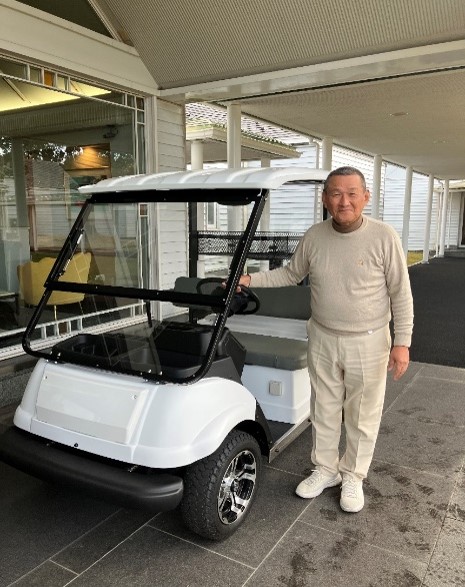
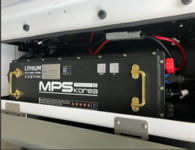
The golf carts (Greenboy III series) are equipped with lithium-ion batteries developed in-house by MPS, a South Korean company.
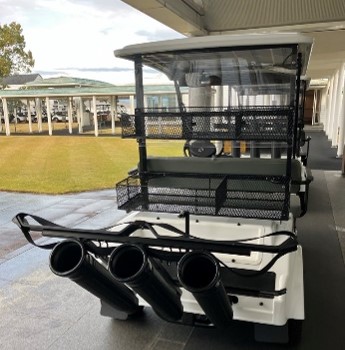
Greenboy III 2-seater 48V
Implementation Record ⑤ Technoplan / 48V Motor & Motor Controller
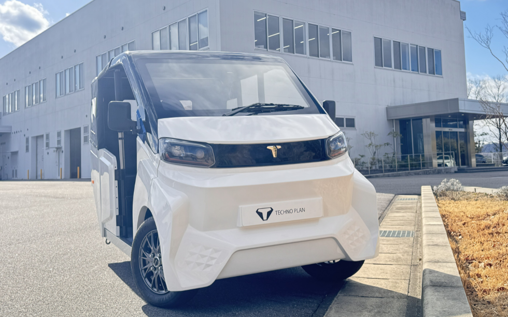
Background/issues
A Value Proposition for Sri Lanka – The Future Realized by Samurai –
Sri Lanka is seeking to foster competitive industries and achieve sustainable economic growth. In particular, the transportation sector faces key policy challenges, including reducing reliance on fossil fuels and decarbonizing. Evolving the three-wheeled taxis, which are central to this transportation system, into safer and more environmentally friendly vehicles is a crucial initiative for the country's future. Technoplan's small three-wheeled electric vehicle (SAMURAI) aligns with Sri Lanka's policy objectives and offers the following value:
- Realizing low-carbon transportation: Electrification reduces fuel consumption and CO₂ emissions, contributing to the promotion of decarbonization policies.
- Potential for industrial development and job creation: Expanding not only vehicle supply but also maintenance, parts distribution, and local production will lead to the development of a sustainable mobility industry and the creation of employment opportunities.
- Diversification of urban mobility: This supports short-distance travel in urban areas and tourist destinations, contributing to the complementarity and efficiency of existing transportation systems.
- Reduced economic burden: By lowering fuel costs and improving maintainability, it contributes to increased profitability for drivers.
Products introduced
48V motors and motor controllers
The company's business ranges from supporting the design and development of EV prototypes (planning, development planning, design, 2D and 3D design, parts procurement, prototype production, and various performance tests) to supporting mass production of vehicles (production planning, parts procurement, production technology, manufacturing technology support, equipment procurement and introduction, trial mass production support, quality control, production management, productivity improvement, cost reduction, etc.), and they have adopted our 48V motors and controllers. Their overseas customers (such as in Sri Lanka) appreciate that they can appeal to customers with higher reliability, robustness, and quality by using Toyota Industries' power units.
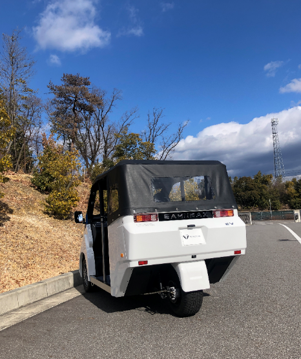
SAMURAI: A small, three-wheeled electric vehicle with two wheels in the front and one in the rear.
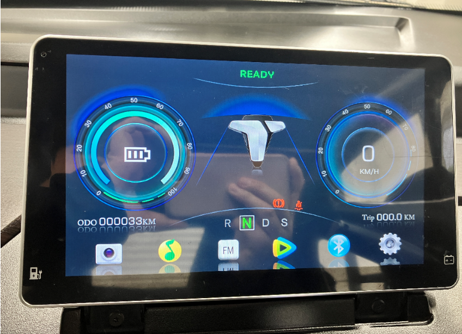
Displays battery level (SOC) and speed.
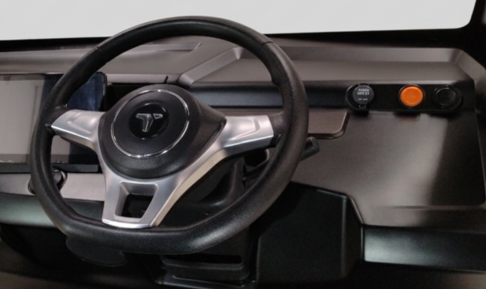
The company's logo is displayed on the handlebars.
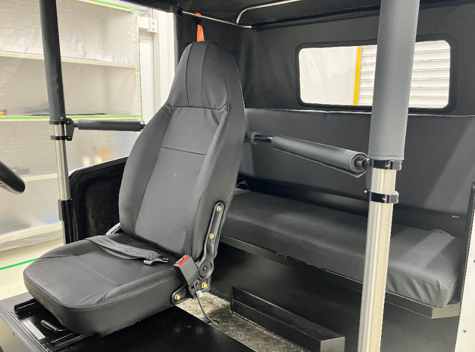
It accommodates the driver plus three passengers and features a spacious interior design.
[Specifications table]
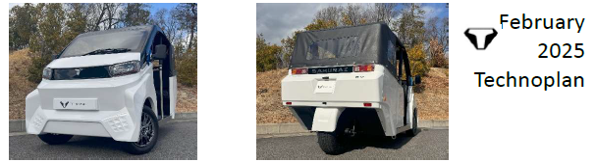
| Name/Type | Mass Production Prototype “SAMURAI” (Model: TP-0001) Tadpole shape (2 wheels at front, 1 at back) | |
|---|---|---|
| Seating Capacity | 4 (3 persons + 1 driver) | |
| Vehicle Size | Length: 2,770 mm, Width: 1,370 mm, Height: 1,680 mm | |
| Wheelbase | 1,990 mm | |
| Quantity per freight | 200 mm | |
| Minimum radius of gyration | 4.0 m | |
| Tare Weight | 597 kg | |
| Gross | 977 kg (597 kg + 380 kg) | |
| Drive system | 1 motor loading gearbox (Speed ratio 10.5) | |
| Tire size | Front tire 155/65R13 Rear tire 225/55R12 | |
| Front Suspension | Macpherson Strut | |
| Rear suspension | Swing arm | |
| Brake Operation System | All-wheel hydraulic disc brake device | |
| Side brake | Rear-wheel disc type | |
| Rated motor output | 5.3 kW Three-phase alternating current motor | |
| Maximum motor output | 13 kW | |
| Maximum torque | 63 N·m | |
| Maximum speed | 60 km/h ※ Set limit for regulation 40 km/h | |
| Cruising Range (One time charge driving range) | 100 km ※ Plan | |
| Standard recharge time Battery | 6 hours ※ Normal temperature Lithium-ion battery, 4.8 kWh (48V100AH), BMS loading Durability: 1,500 times (70% of initial performance) ※ Plan | |
| Battery charging method | AC charger 85-265V Cable charging | |
| Standard equipment | Rear view monitor, Back lamp & Back buzzer, DC12V Cigarette lighter, USB port, Security alarm Frame cover, Seat belt (1 for front seat, 3 for rear seat) | |
[Technoplan's vision for SAMURAI]
Connecting drivers, tourists, and local communities—mobility that drives the future.
Our wish is not simply to deliver new vehicles.
For drivers, we offer safe, comfortable, and pride-worthy tools for their work. For tourists and passengers, we provide a safe and comfortable travel experience. For local communities, we offer a sustainable foundation for thriving industries and jobs.
SAMURAI will elevate the "norm" of three-wheeled taxis to the next level, and lay the roots of a new mobility culture and industry in Sri Lanka.
That is the future we envision.