

- ams-O STATIC RAMS AG
- NEXT Mobility
- ICT and Industrial
- Advanced Technology Solutions
In recent HMI (Human-Machine Interface) designs, there is a demand not only for aesthetic appeal but also for reliable input detection while minimizing errors.
In particular, in automotive, industrial, and home appliance control panels, considerations must be taken into account, such as operation with wet hands or gloves, the use of metal or thick decorative panels, and stable operation in EMI environments. Conventional mechanical SWITCHES and capacitive systems are increasingly finding it difficult to meet all of these requirements simultaneously.
This is where the Optical Force Sensor (OFS) comes into play. OFS uses an optical detection method to detect minute "deflection" of the cover material caused by pressure as a change in light intensity. Because it detects pressure optically, it is less dependent on the presence or absence of conductivity and has the major advantage of being easily applicable to a variety of surface materials, including metals and wood.
This article summarizes the detection principles and design points of OFS (Optical-Free System), and introduces the technical features and use cases of amsO STATIC RAMS 's OFS product, AS7100.
What is OFS?
OFS is an optical sensor that uses infrared light to detect minute deflections (displacements) of objects such as cover materials and measures the amount of change with high precision. The change is so small that it is almost imperceptible to the human eye, but it appears as a difference in the amount of light reflected and returned. OFS converts this difference into an electrical signal to determine whether or not an object has been pressed and how much force has been applied. Because it does not require direct contact with electrodes, it is easy to apply to a variety of cover materials where aesthetics are important, such as metal, resin, glass, and wood.
Basic principles of OFS products
Deflection (displacement) detection using OFS is mainly performed using the following procedure.
The light-emitting part (LED or VCSEL) is directed towards the cover material and illuminated with infrared light.
Infrared light sources such as LEDs and VCSELs are primarily used as light sources for OFS (Outdoor Surface Emitting Lasers). LEDs offer a wide emission range, while VCSELs are suitable for designs that utilize a narrow wavelength band and high directivity.
Optical detection of deflection (displacement) of the cover material due to external force.
When the cover material is pressed, its position, angle, and distance from the sensor change very slightly. As a result, the amount and path of the infrared light that is reflected back change. In other words, the basic idea of OFS is to optically read the displacement caused by the force, rather than directly measuring the force electrically.
The magnitude of the change is quantified from the changes in light intensity and optical path.
PHOTO DETECTORS measures reflected light and converts the signal into a digital value using an internal ADC. By continuously monitoring the difference from the reference state, it can be applied not only to determining the presence or absence of contact, but also to determining the amount of pressure applied and multi-stage input.
These mechanisms allow OFS to avoid the challenges of mechanical and capacitive systems, such as wear on mechanical contacts and environmental dependence of capacitance detection, while making it easier to accurately capture intended presses.
amsO STATIC RAMS OFS product: Key features of the AS7100
The AS7100, an OFS (Optical-Free System) product offered by amsO STATIC RAMS, integrates the light-emitting unit, light-receiving unit, drive circuit, and signal processing circuit necessary for OFS implementation into a single package, lowering the barrier to OFS implementation. Because these functions are realized in a small package of 4.0 mm x 3.05 mm x 0.7 mm, multiple units can be used side-by-side even in limited spaces.
Another major feature is its high displacement resolution, thanks to the adoption of a high-resolution ADC. Because it can capture even minute deflections, it becomes easier to design not only for simple on/off detection, but also for distinguishing between lightly touched and firmly pressed states.
For example, it becomes easier to consider multi-stage input that separates soft and hard presses on a single operation surface, or UI designs that switch functions depending on the amount of pressure applied. This is also effective for products where you want to improve usability without increasing the number of buttons.
Furthermore, because it complies with AEC-Q102-003 automotive quality standards, it can be used in automotive applications that require high reliability. Key features are listed below.
- Built-in high-precision 16-bit ADC (maximum 75 dB SNR)
- Displacement resolution up to 1 µm level (resolution varies depending on the material of the cover and the distance from the sensor)
- Built-in LED driver with adjustable current up to 250 mA.
- I2C interface with a maximum frequency of 400 kHz
- Equipped with 256-byte FIFO memory.
- AEC-Q102-003 compliant
- Small package: 4.0 mm x 3.05 mm x 0.7 mm
Anticipated use cases

Steering wheel SWITCHES

Flat operation of home appliances and industrial equipment
Summary
OFS is not just a new sensor method, but a technology that greatly expands HMI design. It has the potential to capture displacement during pressing with high accuracy even under conditions that are difficult to handle with capacitive methods, such as moisture, gloves, metal covers, and EMI environments. In particular, it is a promising option for products where reducing errors while maintaining design aesthetics is important, products where a sealed structure is crucial, and products where multiple input representations are needed on a single operating surface.
Among these, amsO STATIC RAMS 's AS7100 is a highly integrated device that combines light emission, light reception, driving, and signal processing, making it an attractive option for OFS (Optical-Free System) implementation. Evaluation boards are already available, so you can evaluate it immediately. If you are interested, please feel free Inquiry us.
Inquiry
Related Product Information
Introducing the amsO STATIC RAMS ToF Sensor
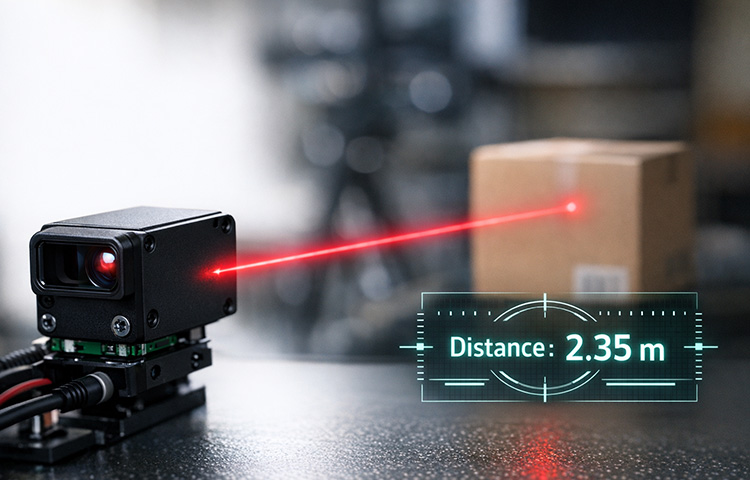
amsO STATIC RAMS 's dToF (dual ToF) ToF sensors enable high-precision, long-range measurements and can be widely used in industrial and consumer applications.
- ams-O STATIC RAMS AG
- NEXT Mobility
- ICT and Industrial
- Smart Factories and Robotics

Introducing the SYNIOS P1515 product
ams O STATIC RAMS 's SYNIOS P1515 is a high-brightness, high-efficiency LED for automotive applications, offering uniform light emission and greater design flexibility in a compact package, while also meeting AEC-Q102 standards for high reliability.
- ams-O STATIC RAMS AG
- NEXT Mobility

OSP (Open System Protocol) Overview
The OSP in ams OSRAM is a free, open network technology for connecting in-vehicle LEDs and sensors. This system is ideal for various applications other than automotive applications.
- ams-O STATIC RAMS AG
- NEXT Mobility
- ICT and Industrial

Ambient Light
amsO STATIC RAMS 's RGBi (Intelligent Ambient Light) offers dynamic color control and animation.
- ams-O STATIC RAMS AG
- NEXT Mobility
- ICT and Industrial
- Smart Factories and Robotics

LEDs for lighting
ams OARAM's lighting LEDs deliver industry-leading performance and reliability with high-power LEDs, enabling smart indoor lighting solutions and commercial outdoor lighting.
- ams-O STATIC RAMS AG
- NEXT Mobility
- ICT and Industrial
- Smart Factories and Robotics